


Home / Editorial
Civil Law
IPR in Bussiness and Woman Participation
« »11-Sep-2023
Introduction
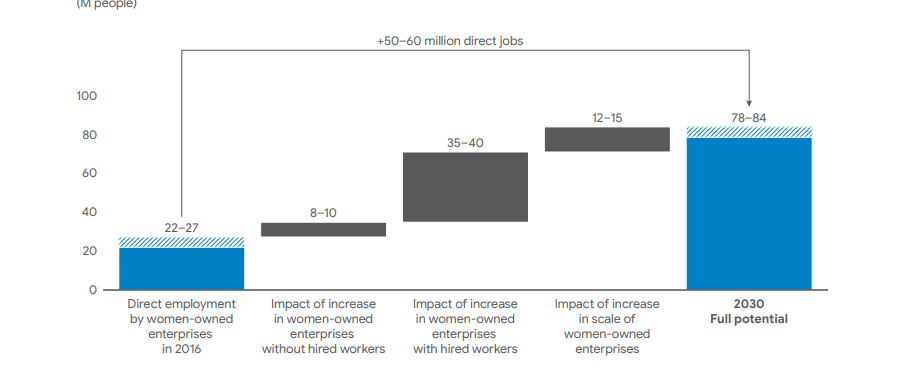
Google and Bain Company came up with a report in 2019 named ‘Powering the Economy with Her’. As per the report, there are 13.5-15.7 million women-owned enterprises in India. This is about 20% of all the Indian enterprises in which women are the owners.
Further, only around 16% of patent applications filed through World Intellectual Property Organization’s (WIPO) Patent Cooperation Treaty (PCT) are from women. WIPO estimates that at current rates, gender parity among PCT-listed inventors will not be achieved before 2064.
- Intellectual Property is the most valuable asset in the modern age. It is the technological innovation that drives human progress which further aids in industrial and economic growth.
Background
- The theme of Intellectual Property Day, 2023 is “Women and IP: Accelerating innovation and creativity”.
- The gender gap persists in India despite of the growing number of females in the workforce.
- IPR plays a critical role in safeguarding and enhancing the value of ideas by entrepreneurs.
- The WIPO needs to educate more women about the advantage of IPR.
- The emphasis is placed on the urgent need for an effective and easy dispute-resolution mechanism.
WIPO
|
Points to Consider
- IPR legislation provides parties with a faster dispute resolution system, but a huge backlog of cases persists in India.
- The dispute resolution system pertaining to IPR is primarily dealt with by arbitration or mediation which forms part of the ODR mechanism.
- ODR is a branch of Alternative Dispute Resolution (ADR) which deals with resolution of disputes through mediation, conciliation and arbitration.
- The NITI Aayog (National Institution for Transforming India) in 2021 by its press release also pushed for Online Dispute Resolution for Speedy Access to Justice.
- In its report named ‘Designing the Future of Dispute Resolution: The ODR Policy Plan for India’, NITI Ayog aims to scale dispute avoidance, containment and resolution online.
- The rollout of the stated recommendations in the report can help make India a world leader in using technology and innovation through ODR for effective access to justice for every individual.
ODR and Female Participation
- In India, the females are responsible for managing homes and even if they become entrepreneurs, they are forced to multitask to balance their professional and personal life.
- The nature and character of ODR can thus make it a perfect fit for female entrepreneurs allowing for a methodical approach to dispute resolution.
- The idea would benefit females as ODR is a process that is entirely conducted online from registration of dispute to submission of arguments by the parties and publishing of awards.
Significance of Intellectual Property Rights
- IPR helps to protect and leverage a company's intellectual assets, providing a competitive edge and promoting innovation. Some of its key benefits are enumerated as follows:
- Protection of Innovations: IPR such as patents, protect a company's unique inventions and innovations. This protection prevents others from making, using, selling, or importing the same invention for a specified period, allowing the business to capitalize on its research and development investments.
- Exclusive Rights: IPR grants exclusive rights to use, license, or sell protected intellectual property.
- Market Differentiation: Trademarks and branding are valuable assets that distinguish a business's products or services from those of competitors.
- Deterrent for Competitors: The existence of IPR can deter competitors from entering a market or infringing one's innovations. The risk of legal consequences can discourage others from copying your intellectual property.
- Legal Recourse: If someone infringes on one’s IPR, he has a legal remedy to enforce those rights through litigation, potentially leading to recovery of damages or royalties.
Participation of Women and IPR
- Women participation can be increased in the IPR field by incorporating certain steps, few of which are:
- Awareness and Outreach: By organizing workshops, seminars, and conferences that highlight the contributions of women in the IPR field can significantly aid women in knowing the various dimensions of this field. These events can also serve as networking opportunities.
- Networking and Professional Associations: By supporting the creation of women-focused or diversity-focused IPR professional organizations and encouraging participation in existing associations.
- Equal Opportunities in Employment: By promoting equal opportunities and pay equity for women in the workplace, including within law firms, corporate legal departments, and government agencies dealing with IPR.
- Support for Entrepreneurs and Startups: By Providing funds, mentorship, and resources specifically tailored to the needs of women entrepreneurs and inventors in the IPR field.
- Policy Advocacy: By advocating for policies that promote gender diversity in IPR, both at the national and international levels, also by encouraging Government to collect and publish data on gender diversity in IPR-related industries.
Legal Provisions
- The primary IPR enactments in India are enlisted below:
- The Copyrights Act, 1957
- The Trademarks Act, 1999
- The Patents Act, 1970
- The Design Act, 2000
- The Geographical Indications of Goods (Registration and Protection) Act, 1999
- The Protection of Plant Varieties and Farmer’s Rights Act, 2001
- The Semiconductor Integrated Circuits Layout- Design Act, 2000
Way Forward
- The adoption of ODR can encourage innovation, promote entrepreneurship and most importantly promote equality in IPR protection. Therefore, India should prioritize adopting the ODR mechanism.
- ODR platforms can be tailored to specific industries or types of disputes, making them adaptable to the unique needs of various sectors.
- The ODR mechanism can handle a large volume of disputes simultaneously, making it suitable for platforms with millions of users or businesses with numerous transactions. It can further facilitate the enforcement of decisions through various means, such as automated processes, which can be challenging to achieve in traditional cross-border disputes.
- For businesses operating globally, it's essential to understand IPR laws and regulations in different countries and following international treaties, like the Agreement on Trade-Related Aspects of Intellectual Property Rights (TRIPS) will aid in maintaining uniformity of practice.