


-
- Books & Magazines
- Login
- Language: Eng हिंदी
Home / Company Law
Civil Law
Key Differences: Memorandum of Association vs. Articles of Association
« »16-Mar-2026
Introduction
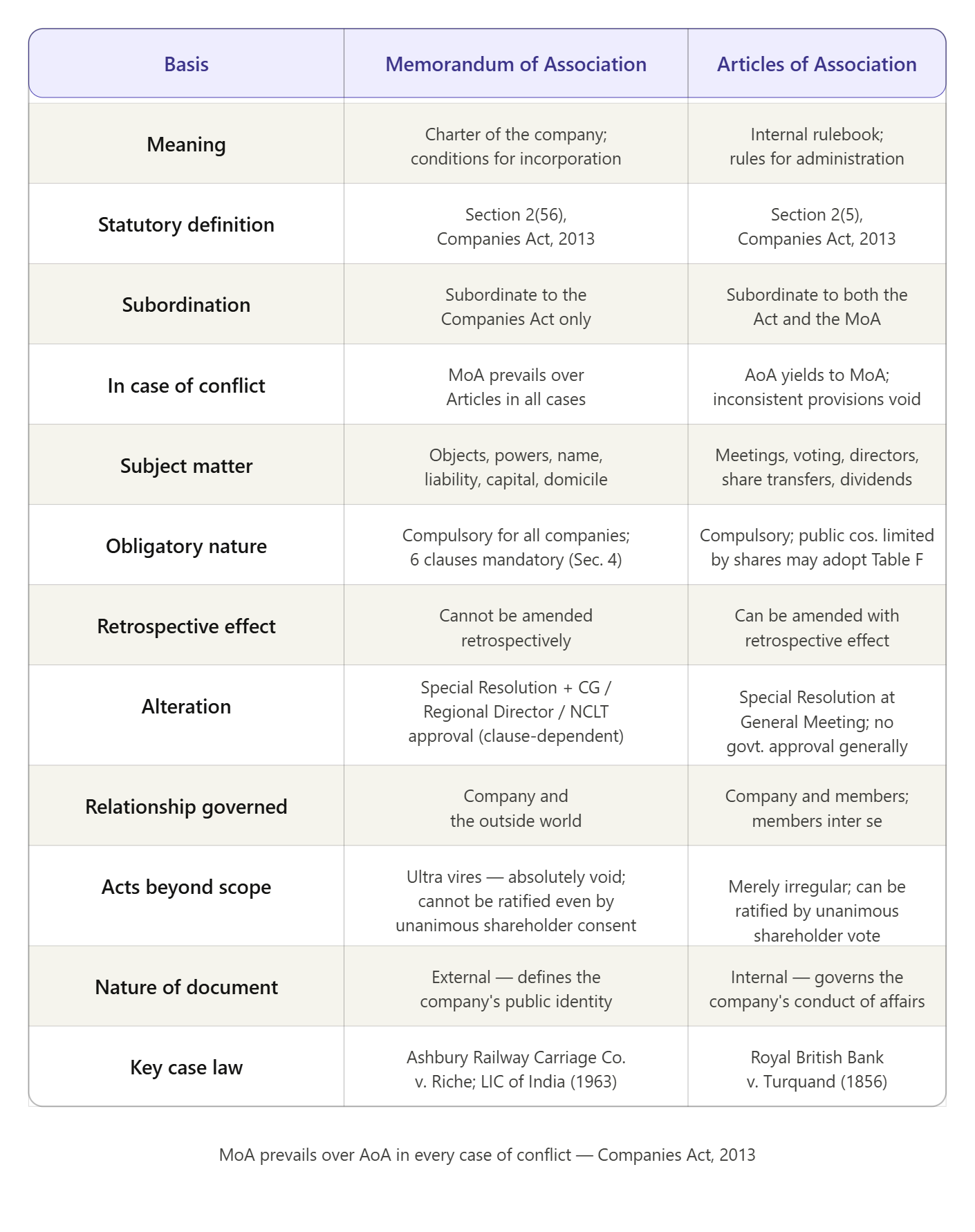
Every company incorporated under the Companies Act, 2013 is built upon two core constitutional documents: the Memorandum of Association (MoA) and the Articles of Association (AoA). While both are indispensable to a company's existence, they serve distinct and complementary purposes.

- The MoA is defined under Section 2(56) of the Companies Act, 2013 as the memorandum of association of a company as originally framed or altered from time to time. Lord Cairns aptly described it as a document that defines and confines the powers of a company. It is rightly called the Charter of the Company.
- The AoA, defined under Section 2(5), contains the rules and regulations framed for the internal management and administration of the company. Together, these documents govern the company's relationship with the outside world and with its own members respectively.
Conclusion
The Memorandum of Association and the Articles of Association together constitute the constitutional framework of a company. While the MoA acts as the external charter defining the company's powers, identity, and permissible objects, the AoA serves as the internal rulebook regulating the conduct of its affairs and the rights of its members.
- The hierarchical relationship between the two documents — with the MoA taking precedence — ensures that a company's internal regulations never override its publicly declared charter. The stricter alteration requirements applicable to the MoA reflect the legislature's intent to protect third parties and creditors who deal with the company in reliance upon it. Together, these documents ensure transparency, accountability, and legal certainty throughout the life of the company.